How to Build a Morning Routine That Sets You Up to Win Every Day
Your Morning Sets the Tone for Everything
How you start your morning determines how you operate for the rest of the day. That's not motivational rhetoric - it's how your brain works. The first hour of your day establishes your mental state, your energy levels, and your focus capacity. Start with intention and structure, and you carry that momentum through every decision you make until you go to sleep. Start with chaos, and you spend the entire day playing catch-up.
Most men don't have a morning routine. They have morning reactions. The alarm goes off, they check their phone, scroll through notifications, respond to emails from bed, and then rush through getting ready while already feeling behind. By the time they start their actual work, they've already given away their best mental energy to other people's priorities.
Building a structured morning routine isn't about waking up at 4 AM or doing cold plunges in your backyard. It's about creating a consistent, repeatable process that puts you in the driver's seat before the world starts making demands. And it's simpler than most people make it.
Why Most Morning Routine Advice Doesn't Work for Real Life
If you've ever looked up morning routines for men, you've probably seen the same list: wake up at 5 AM, meditate for 20 minutes, journal for 15 minutes, exercise for 60 minutes, take a cold shower, read for 30 minutes, eat a perfectly balanced breakfast, and review your goals - all before 7 AM. That's a two-hour production that sounds great on paper and fails spectacularly in practice.
The problem with these "ideal" morning routines is that they're designed for people with unlimited time and zero real-world constraints. If you have a job that starts early, kids who need attention, or a commute that eats into your morning, a two-hour routine isn't just impractical - it's impossible. And when you can't execute the "perfect" routine, you feel like you've already failed before the day starts.
A better approach is designing a morning routine that's built for your actual life, not some idealized version of it. Something that takes 30 to 60 minutes, is flexible enough to survive a bad night's sleep or an early meeting, and still sets you up to operate at a high level.
The Four Pillars of an Effective Morning Routine
Every effective morning routine addresses four areas: body, mind, priorities, and commitment. You don't need to spend an hour on each. You need to touch each one briefly to prime your system for a productive day.
Pillar 1: Move Your Body (10-15 Minutes)
You don't need a full gym session in the morning (unless that's your preference and your schedule allows it). What you need is physical activation - something that gets blood flowing, raises your heart rate slightly, and transitions your body from sleep mode to performance mode.
This could be a quick bodyweight circuit: push-ups, squats, planks. It could be a 15-minute walk outside. It could be stretching or mobility work. The specific activity matters less than the consistency of doing something physical before you sit down at a desk or get in a car.
Physical movement in the morning triggers neurotransmitter release that improves focus, mood, and cognitive function for hours afterward. It's the highest-ROI investment you can make in your morning.
Pillar 2: Prime Your Mind (5-10 Minutes)
Before the world starts injecting information into your brain -emails, news, social media - take a few minutes to set your own mental state. This doesn't have to mean traditional meditation (though that works if it's your thing).
Some effective options: read a few pages of a book that aligns with your current goals. Listen to a podcast segment that educates or motivates you. Sit with a cup of coffee and think about what you want to accomplish today. The point is to fill your mind with intention before other people fill it with their agendas.
The critical rule here: do not check your phone first thing in the morning. The moment you open email or social media, you've handed control of your attention to someone else. Guard your first 30 minutes fiercely. They belong to you.
Pillar 3: Set Your Priorities (5 Minutes)
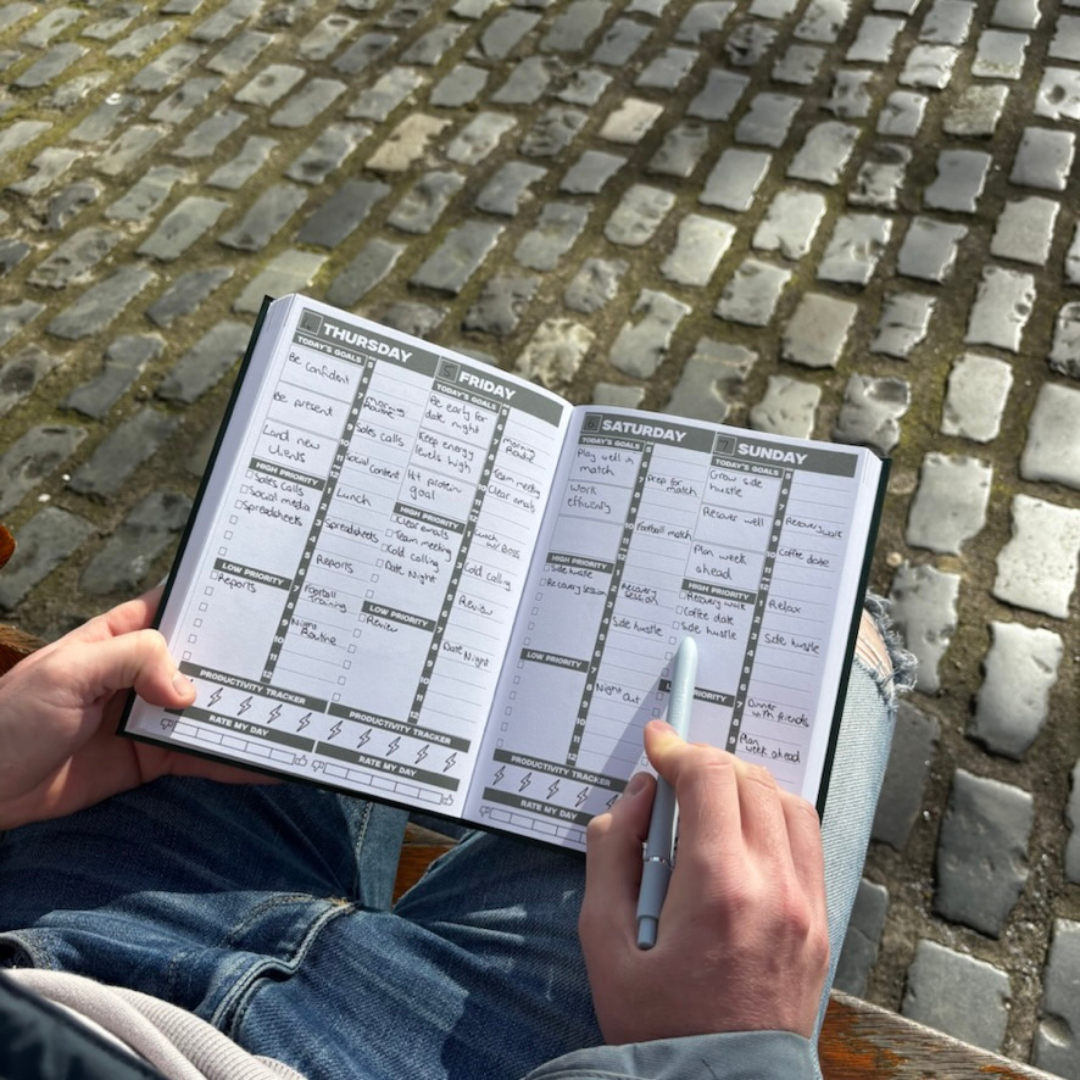
This is where your planner becomes your most important morning tool. Open it, look at your weekly plan, and identify your single most important task for the day. Not your task list - your priority. The one thing that, if you accomplish it today, makes the day a success regardless of what else happens.
Write it down. Look at it. Commit to it. This five-minute practice eliminates the "what should I work on?" paralysis that wastes the first hour of most people's workdays. When you know your priority before you sit down, you start executing immediately instead of sorting through options.
If you're using the 'Plan Your Growth' Undated Weekly Agenda, your weekly priorities are already laid out. Your morning planning session is just confirming today's focus and making sure you know exactly what execution looks like for the next few hours.
Pillar 4: Make a Commitment (2 Minutes)
Before you transition into your day, make one specific commitment to yourself. It could be as simple as: "Today, I will complete the proposal before I check email." Or: "Today, I will hit the gym after work no matter how tired I feel." Or: "Today, I will not scroll social media during work hours."
This commitment acts as a micro-contract with yourself. It's specific, it's actionable, and it's for today only - not forever, just the next 16 hours. Small, daily commitments build the self-trust that underpins long-term discipline.
A Realistic Morning Routine Template
Here's what a practical, 45-minute morning routine looks like for a real man with real obligations:
6:00 AM — Wake Up. No snooze. Feet on the floor. The snooze button is a negotiation with yourself about whether today matters. It does. Get up.
6:05 AM — Hydrate. Glass of water. Your body has been dehydrating for 7-8 hours. This is basic maintenance.
6:10 AM — Move. 15 minutes of physical activity. Push-ups, pull-ups, a quick run, stretching — whatever gets your blood moving.
6:25 AM — Mind. 10 minutes of reading or focused thinking. No phone. No screens. Just you and a book or your own thoughts.
6:35 AM — Plan. Open your planner. Review your weekly priorities. Identify today's single most important task. Write your daily commitment.
6:45 AM — Ready. Shower, dress, eat. By 7:15 you're starting your day with clarity, energy, and purpose that most people won't find until noon — if they find it at all.
Adjust the times to fit your schedule. The sequence matters more than the specific clock times. Move, think, plan, commit. In that order. Every morning.
How to Make Your Morning Routine Stick
The biggest threat to a morning routine isn't lack of motivation - it's lack of preparation. Here's how to eliminate the friction that kills morning routines:
Prepare the night before. Set out your workout clothes. Put your planner and pen on your desk or kitchen table. Know what you're having for breakfast. Every decision you can make the night before is one less decision draining your willpower in the morning.
Start smaller than you think. If you currently have no morning routine, don't try to implement the full 45-minute version on day one. Start with 15 minutes - move for 5, read for 5, plan for 5. Build from there. A consistent 15-minute routine beats an inconsistent 60-minute one every time.
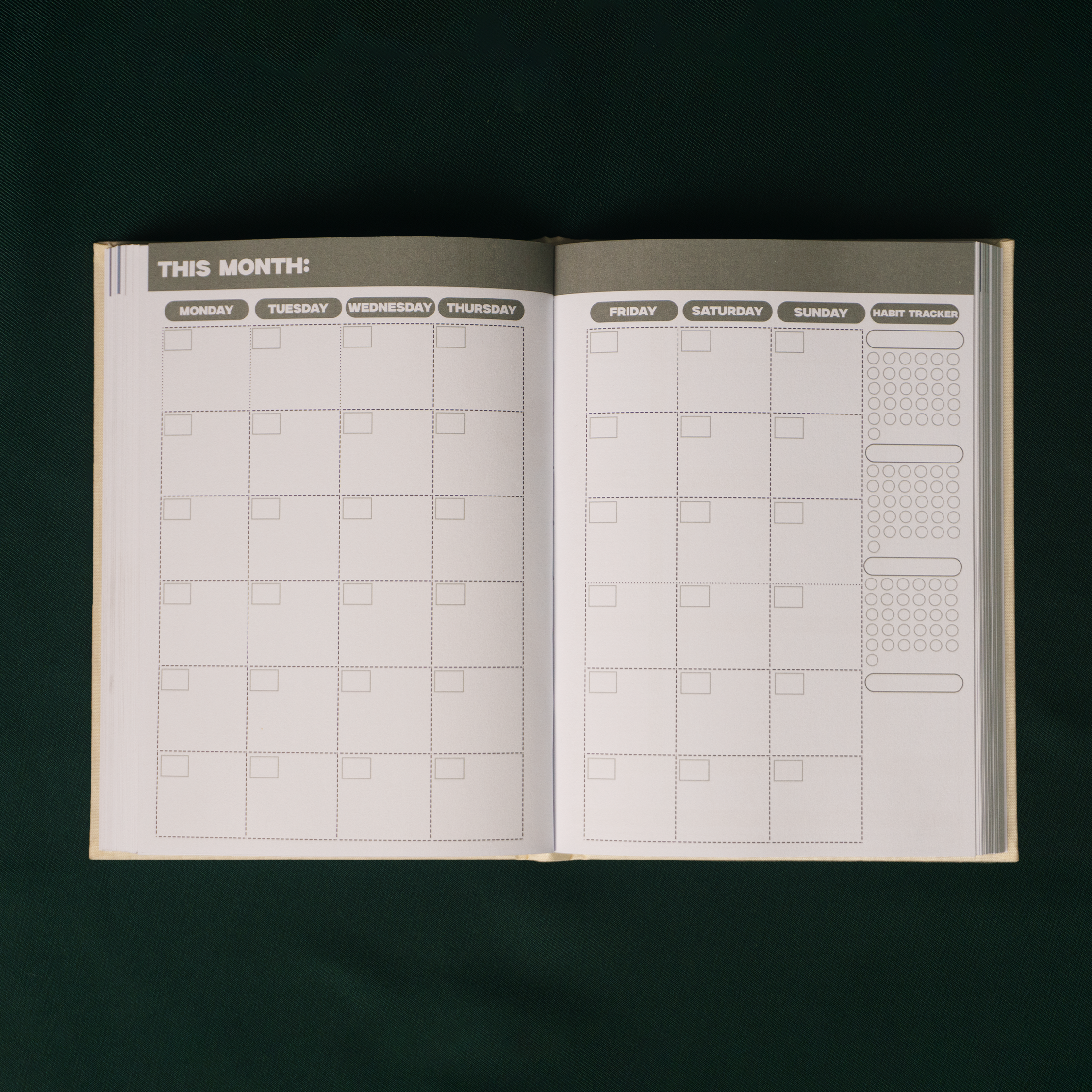
Track it. Use the habit tracking system in your planner to record whether you completed your morning routine each day. Seeing the consistency (or the gaps) in black and white keeps you accountable and shows you patterns you might not notice otherwise.
Protect your sleep. A morning routine is only as good as the sleep that precedes it. If you're going to bed at midnight and trying to wake up at 5 AM, you're fighting biology. Move your bedtime earlier gradually. Your morning routine starts with how you end your evening.

The Compound Effect of Winning Your Morning
Here's the math that most men don't think about. If you implement a consistent 45-minute morning routine five days a week, that's 3.75 hours per week of intentional, focused personal development. Over a quarter, that's roughly 45 hours. Over a year, that's 195 hours of structured growth time that you didn't have before.
But the impact goes far beyond those hours. When you start each day with clarity and intention, the quality of your entire day improves. You make better decisions. You procrastinate less. You're more focused during work. You have more energy for the people and projects that matter. The morning routine isn't just about the morning - it's about how the morning elevates everything that follows.
And it compounds. Week after week, month after month, the man who starts each day with structure and intention pulls further ahead of the man who starts each day reacting to his phone. Not because he's more talented or more motivated, but because he has a system that's working for him every single morning.
Stop Reacting. Start Designing.
Your morning is either something that happens to you or something you design with intention. One path leads to stress, scattered focus, and the constant feeling of being behind. The other leads to clarity, momentum, and the quiet confidence that comes from knowing you've already won the day before most people are fully awake.
The choice is yours. And it starts tomorrow morning.

Design Your Mornings. Win Your Days.
The 'Plan Your Growth' Undated Weekly Agenda gives you daily planning pages, habit tracking, and weekly structure to make your morning routine part of a bigger system. No fluff. No wasted pages. Just execution.
Plan your growth. Win every morning. Execute every day.