How to Track Habits That Actually Build Discipline
The Discipline Problem Most Men Don't Recognize
Ask any man what's holding him back from his goals and he'll usually say one of two things: time or discipline. The time excuse is rarely true - you have the same 24 hours as everyone else, and how you allocate them is a choice. But the discipline excuse? That one deserves a closer look, because most men misunderstand what discipline actually is.
Discipline isn't gritting your teeth and forcing yourself through misery. That's willpower, and willpower is a finite resource that depletes throughout the day. Real discipline is building systems and routines that make the right actions automatic. It's designing your day so that showing up consistently becomes the path of least resistance.
And the tool that bridges the gap between intention and automatic execution? Habit tracking.
Not the gamified app-based tracking that gives you streaks and badges. Not the overly complex spreadsheet with thirty different metrics. A simple, visual, paper-based system that shows you - in black and white - whether you're being the man you say you want to be.
Why Habit Tracking Works (The Science Is Clear)
Habit tracking works because of a principle called "measurement awareness." When you track a behavior, you become more aware of it. And when you're aware of it, you're more likely to do it. It's that simple.
But there's a deeper mechanism at play. Tracking creates a visual record of your consistency, and that record becomes its own motivation. When you see a string of completed days on paper, you don't want to break the chain. The investment you've already made creates forward momentum -you keep going because you can see the proof of your commitment.
There's also the accountability factor. Your habit tracker doesn't lie, doesn't make excuses, and doesn't let you rationalize. It simply reflects what you did and what you didn't do. That level of honest feedback is rare in life, and it's incredibly valuable for anyone serious about growth.
Studies on behavior change consistently show that people who track their habits are significantly more likely to maintain them long-term compared to those who don't. The tracking itself becomes part of the habit loop -the small satisfaction of marking off a completed day reinforces the behavior and makes it easier to repeat.
The Mistake Most People Make With Habit Tracking
Here's where most men go wrong. They try to track everything. Sleep hours, water intake, steps, meditation minutes, reading time, gym sessions, cold showers, journaling, screen time, calories, protein grams - the list goes on until the tracking itself becomes a full-time job.
When you track twenty habits, you're not really tracking anything. You're just maintaining a complicated checklist that adds stress rather than reducing it. And when you inevitably can't keep up with all twenty, you feel like a failure and drop the whole system.
The solution is ruthless simplicity. Track three to five habits maximum. That's it. Choose the habits that have the highest impact on your current goals and ignore everything else. You can always rotate habits in and out as your priorities shift. But at any given time, you should only be tracking the vital few.
How to Choose the Right Habits to Track
The habits worth tracking are what I call "keystone habits" - the ones that create positive cascading effects across multiple areas of your life. Here's how to identify them:
Connect Habits to Your 90-Day Goal
If your quarterly goal is to build muscle, your tracked habits might be: gym sessions (4x/week), protein target hit (daily), and sleep 7+ hours (daily). Each habit directly supports the overarching goal. There's no guesswork about why you're tracking them.
Choose Leading Indicators, Not Lagging Ones
A leading indicator is an action you control. A lagging indicator is a result you measure. Track the leading indicators. "Did I go to the gym today?" is a leading indicator you can control. "Did I lose weight this week?" is a lagging indicator that depends on multiple factors. Track what you can control, and the results will follow.
Make Them Binary
Each habit should be a clear yes or no. Did I do it today, or didn't I? "Exercise" is vague. "Did I complete at least 30 minutes of training?" is binary. Binary habits are easy to track and impossible to rationalize. You either did the thing, or you didn't.
Keep the Bar Achievable
Your tracked habits should be challenging but not impossible. If you're tracking "read for 2 hours daily" but you currently read zero, you're setting yourself up for failure. Start with "read for 15 minutes daily." Build the consistency first. Increase the intensity later.
The Simple Habit Tracking System
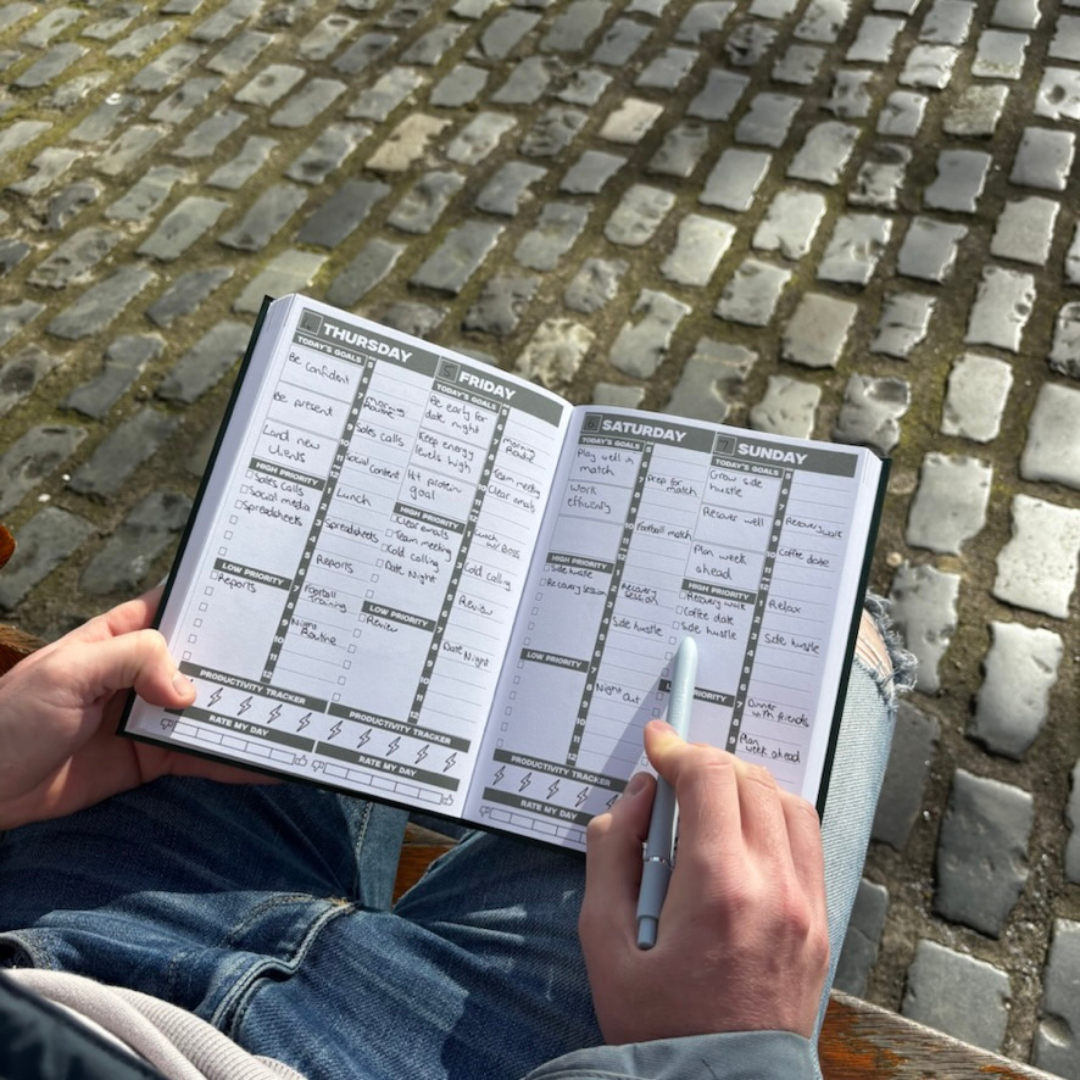
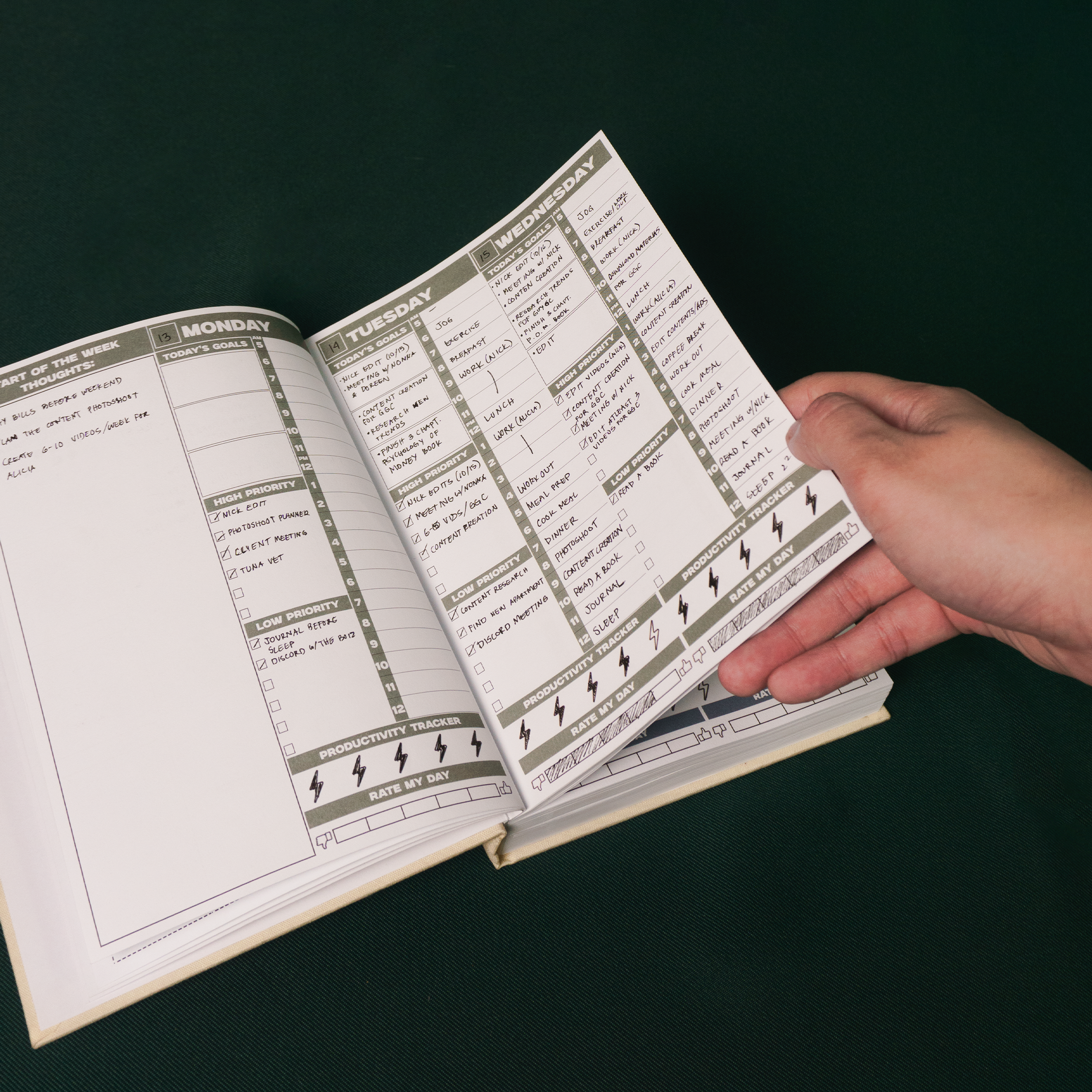
Here's a practical system that you can start today. No apps required. No complex setup. Just your planner and a pen.
Step 1: Select Your Three to Five Habits
Based on your current quarterly goal, choose three to five keystone habits. Write them at the top of your weekly tracking page. These are your non-negotiables for the quarter.
Step 2: Track Daily With a Simple Mark
Each day, mark whether you completed each habit. A check mark, an X, a filled circle - whatever works for you. The format doesn't matter. The consistency of recording does. Do this at the same time each day, ideally during your evening wind-down or morning planning.
Step 3: Review Weekly
At the end of each week, count your completion rate for each habit. If you aimed for 4 gym sessions and hit 3, that's 75%. No judgment - just data. Over time, patterns emerge. Maybe you always miss Friday workouts. Maybe your reading habit drops off on weekends. The data tells you where to focus your attention.
Step 4: Adjust Monthly
At the end of each month, zoom out. Which habits are you consistently hitting? Those might be ready to become automatic - you can stop actively tracking them and replace them with new ones. Which habits are you struggling with? Those need a closer look. Is the habit too ambitious? Is the timing wrong? Is there a barrier you need to remove?
Step 5: Reset Quarterly
When your 90-day goal changes, your tracked habits change with it. This keeps the system fresh and relevant. You're never tracking habits for the sake of tracking. Every habit has a purpose connected to your current mission.
Why Paper Tracking Beats App Tracking
Habit tracking apps have one major flaw: they live on the same device as your biggest distractions. Every time you open your phone to check off a habit, you're one notification away from a 30-minute detour into social media or email.
Paper tracking keeps the process analog and intentional. You open your planner, you mark your habits, you close your planner. There's no algorithm trying to keep you engaged. There's no notification pulling you away. It's just you, your pen, and an honest record of your day.
There's also the permanence factor. Digital data is easy to delete, edit, or ignore. When something is written on paper, it's there. Your successful days are visible. Your missed days are visible. Both serve a purpose - the successes build confidence, and the misses provide information for improvement.

What Discipline Actually Looks Like After 90 Days of Tracking
Here's what happens when you commit to tracking three to five habits for a full 90 days. In the first two weeks, it feels manual. You have to remind yourself to track. You might miss a day or two. That's normal.
By week four, the tracking becomes routine. You barely think about it. But more importantly, the habits themselves start becoming automatic. You go to the gym not because your tracker reminds you, but because it's just what you do on Monday, Wednesday, and Friday.
By the end of 90 days, something has shifted. The habits that felt like discipline at the beginning now feel like identity. You're not someone who's "trying to be consistent." You are consistent. The tracking data proves it. And that proof creates a self-image that sustains the behavior long after the conscious effort fades.
That's the real power of habit tracking. It doesn't just help you build habits. It helps you build a new version of yourself - one who shows up, follows through, and gets things done. Consistently. Quietly. Without fanfare. That's what real discipline looks like.
Start Tracking Today
You don't need to overhaul your entire life. Pick three habits that support your current goal. Write them down. Track them daily. Review weekly. That's the entire system. Simple doesn't mean easy, but simple does mean sustainable. And sustainable is what builds lasting discipline.

Build Discipline That Lasts
The 'Plan Your Growth' Undated Weekly Agenda includes built-in habit tracking pages designed for men who want results, not just checkboxes. Three to five habits. Weekly reviews. Quarterly resets. Everything you need in one system.
Plan your growth. Track what matters. Build discipline that compounds.