Breaking Bad Habits: The Science of Habit Replacement
Trying to just stop a bad habit through sheer willpower is one of the least effective strategies available, and most men attempt it anyway because it feels like the direct, honest approach. Decide to quit. White-knuckle through the cravings. Fail within a week and conclude you lack discipline. The actual science of behavior change tells a different story: habits are not broken through suppression, they are broken through replacement, because the neurological loop driving the behavior does not disappear just because you decided to stop. It has to be redirected.
Why Willpower Alone Fails to Break Habits
Every habit runs on a three-part loop: a cue that triggers the behavior, the routine itself, and a reward that reinforces the loop and makes it more likely to fire again next time you encounter the same cue. This structure, extensively documented in behavioral psychology and popularized in James Clear's work on habit formation, explains why simply deciding to stop a behavior so often fails. The cue is still there. The craving for the reward is still there. All you have removed is the routine, leaving the loop half-intact and straining against the gap you just created.
This is why quitting a bad habit purely through suppression tends to produce a rebound effect. The stress hormone of an unmet craving builds, and eventually, often at your lowest-willpower moment, the loop completes anyway, sometimes more intensely than before, because the underlying cue and reward drive were never actually addressed. You did not break the habit. You paused it under strain, and strain eventually gives out.
Habit replacement works differently. Instead of trying to eliminate the routine and leave a void, you keep the cue, keep the reward, and swap out only the routine in between, redirecting the loop toward a behavior that satisfies a similar need without the cost of the original habit.
Identifying Your Actual Cue and Reward
Before you can replace a habit, you need to understand what is actually driving it, which requires a more honest audit than most men initially attempt. Take the habit you want to break, checking your phone compulsively, late-night snacking, procrastinating on hard tasks, and trace it backward.
What is the cue? Is it a specific time of day, a location, an emotional state, the presence of certain people, or the completion of a preceding action? Phone checking is often triggered by boredom or a lull in stimulation. Late-night snacking is often triggered by the specific transition into relaxed, unstructured evening time rather than actual hunger.
What is the reward you are actually chasing? This is rarely what it appears to be on the surface. Compulsive phone checking is rarely about the content itself, it is usually about a small dopamine hit and momentary relief from boredom or discomfort. Procrastination on hard tasks is rarely about laziness, it is usually about avoiding the discomfort of potential failure or difficulty, with the reward being immediate relief from that discomfort.
Once you can name the actual cue and the actual reward honestly, you have the two fixed points of the loop. The routine in the middle is the only piece that needs to change.
Designing the Replacement Routine
The replacement behavior needs to satisfy a genuinely similar reward through a different, more constructive routine, or it will not stick. Swapping a bad habit for a replacement that provides no real satisfaction is functionally the same as suppression, and it will fail the same way, through eventual strain and rebound.
If the reward behind late-night snacking is comfort and transition into rest, a replacement might be a warm drink and five minutes of stretching, something that provides a similar sensory shift into relaxation without the food. If the reward behind compulsive phone checking is relief from boredom, a replacement might be a genuinely engaging alternative kept within reach, a physical book, a puzzle, something that offers real stimulation rather than asking you to simply sit with the boredom and white-knuckle through it.
Pair the replacement with the exact same cue that triggered the original habit. This is critical. If the old habit fired at a specific time or in a specific location, the replacement needs to fire at that same time and location, or the cue will simply continue triggering the old behavior out of pure habitual momentum while the replacement sits unused elsewhere.
Using Environment to Support the Replacement
Habit replacement succeeds far more reliably when the environment is redesigned to support it rather than left to fight against pure willpower in the moment. If you are replacing late-night phone scrolling with reading, the book needs to be physically closer and more accessible than the phone at the moment the cue fires, not buried in a drawer while the phone sits charging on the nightstand exactly where your hand reaches automatically.
This environmental support is what turns a good intention into a durable change. Removing friction from the replacement behavior and adding friction to the old one, phone charging in another room, book on the pillow, does more heavy lifting than motivation ever will, especially in the early weeks before the new loop has had time to become automatic on its own.
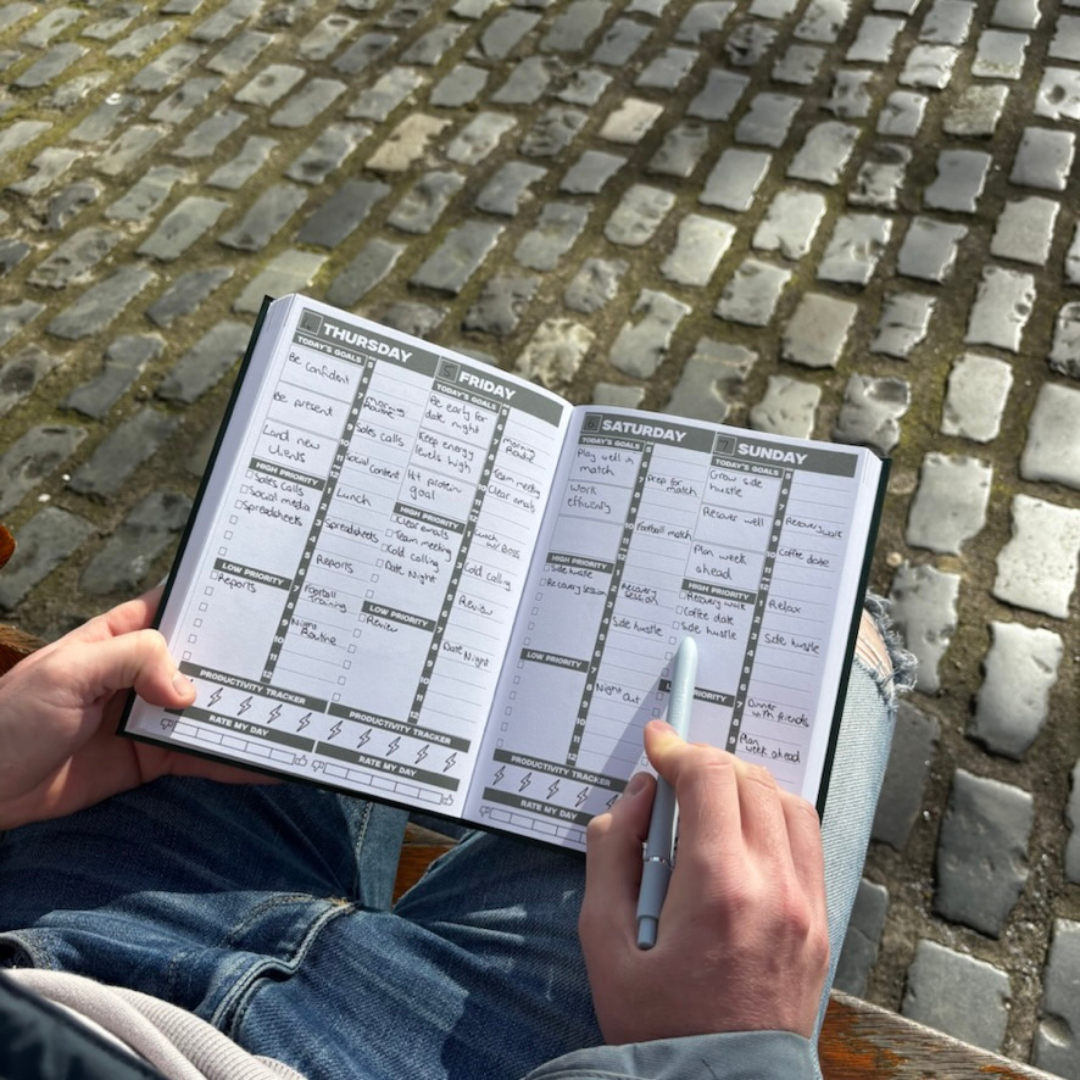
Tracking the replacement consistently also matters here, since visible progress reinforces the new loop far more effectively than an unmeasured, purely mental commitment. The Plan Your Growth undated weekly agenda includes habit tracking built directly into the weekly structure, so the replacement behavior gets the same visible accountability the old habit used to get from pure repetition, giving the new loop a genuine chance to establish itself.
Why Relapses Do Not Mean the Method Failed
A relapse into the old habit during the replacement process is common and does not mean habit replacement does not work for you specifically. It usually means one of two things: the replacement did not actually satisfy the same underlying reward, or the environment still made the old habit easier to access than the new one in a moment of low willpower.
Rather than treating a relapse as evidence of personal failure, treat it as diagnostic information. What was the cue in that specific moment? Did the replacement genuinely feel unsatisfying, or was the old habit simply more physically accessible? Adjust the replacement or the environment accordingly, and resume. This is a normal, expected part of the process, not a sign that you are uniquely bad at behavior change while everyone else finds it effortless. Almost nobody finds it effortless. They just iterate through the failures faster because they expect them.
The Timeline You Should Actually Expect
The popular claim that habits form in exactly twenty-one days does not hold up well under closer research scrutiny. Studies on habit formation, including work often cited alongside University College London research on the topic, generally find the real timeline varies significantly by person and behavior, often landing somewhere between two and several months before a new routine starts running with meaningfully less conscious effort.
Setting an accurate expectation matters because an unrealistic twenty-one-day timeline sets men up to conclude the method failed right around the point where consistent effort was actually starting to pay off. Commit to the replacement loop for at least eight to twelve weeks before judging whether it has genuinely taken hold, tracking consistently rather than relying on memory to gauge your own progress.
The Bottom Line
You cannot suppress a habit loop out of existence. You can redirect it, keeping the same cue and satisfying a similar reward through a new, more constructive routine, supported by an environment designed to make the new behavior easier than the old one. Identify your actual cue and reward honestly, design a replacement that genuinely satisfies the same need, and track it visibly for at least two months before judging the results. Relapses are data, not verdicts. Keep iterating.
The Plan Your Growth undated weekly agenda gives your replacement habits the visible weekly tracking that turns a fragile new routine into a genuinely established one, one tracked week at a time.