Breaking the Procrastination Loop With a System, Not Hype
Ask any man what's holding him back from his goals and he'll usually say one of two things: time or discipline. The time excuse is rarely true. The discipline excuse is closer, but still misses the actual mechanism. Procrastination is not a character flaw and it is not a time management problem. It is an emotional regulation problem, a short term move to avoid discomfort right now, at the cost of a bigger problem later. Breaking the procrastination loop requires understanding that mechanism and building a system around it, not another round of motivation that will not survive the next uncomfortable task.
The relief from avoidance is real, which is exactly why the pattern repeats. Putting off an uncomfortable task genuinely reduces discomfort in that specific moment, the same way any short term relief does. The problem is the trade, immediate relief for a larger cost later, usually arriving at a worse time and carrying more pressure than the original task ever did.
The Real Mechanism Behind Why You Delay
Tim Pychyl, one of the leading researchers on procrastination, has spent decades studying why people delay tasks they know they should be doing, and his findings consistently point away from laziness and toward something more specific: procrastination is primarily a way of managing negative emotion attached to a task, not a deficiency in time management or willpower. The task feels boring, uncertain, or threatening to your sense of competence, and delaying it provides immediate relief from that discomfort.
This reframe matters because it changes what you are actually solving for. A time management fix does nothing against an emotional avoidance pattern, which is why so many productivity systems fail for men who have already tried the scheduling and app based approaches. You cannot schedule your way out of a feeling. You have to address the feeling directly, or build a system that makes acting despite the feeling the path of least resistance.
This is also why buying another app or a more elaborate planner rarely fixes the underlying pattern on its own. The tool can support a system. It cannot replace the actual mechanism of reducing the emotional cost of starting, which is a behavioural problem, not a tooling one, however well designed the next app claims to be.
Lazy men don't feel guilty. You do. That difference matters, because it tells you what you're actually dealing with. You're not short on motivation in some deep sense. If you were, you wouldn't be reading this, and you wouldn't feel the specific discomfort of knowing exactly what needs doing while still not doing it.
That guilt is actually useful information if you listen to it correctly. It is evidence that the goal still matters to you, that the avoidance is not indifference but a specific, solvable pattern of managing discomfort badly. Treat the guilt as a signal pointing toward a system problem, not as proof of some deeper character flaw that needs fixing first.
The Two Minute Rule for Breaking the Initial Resistance
The hardest part of any avoided task is rarely the task itself. It is the first two minutes, the specific moment of starting, when the discomfort that drove the avoidance in the first place is at its sharpest. The two minute rule is simple: commit to starting the task for just two minutes, with explicit permission to stop after that if you genuinely want to.
In practice, almost nobody stops after two minutes once they have actually started. The resistance was concentrated almost entirely in the starting moment, not in the task itself, and once that initial barrier is crossed, continuing the task is usually far easier than the anticipation made it seem. The two minute rule works by making the commitment small enough that the emotional resistance cannot find a strong enough foothold to win the negotiation.
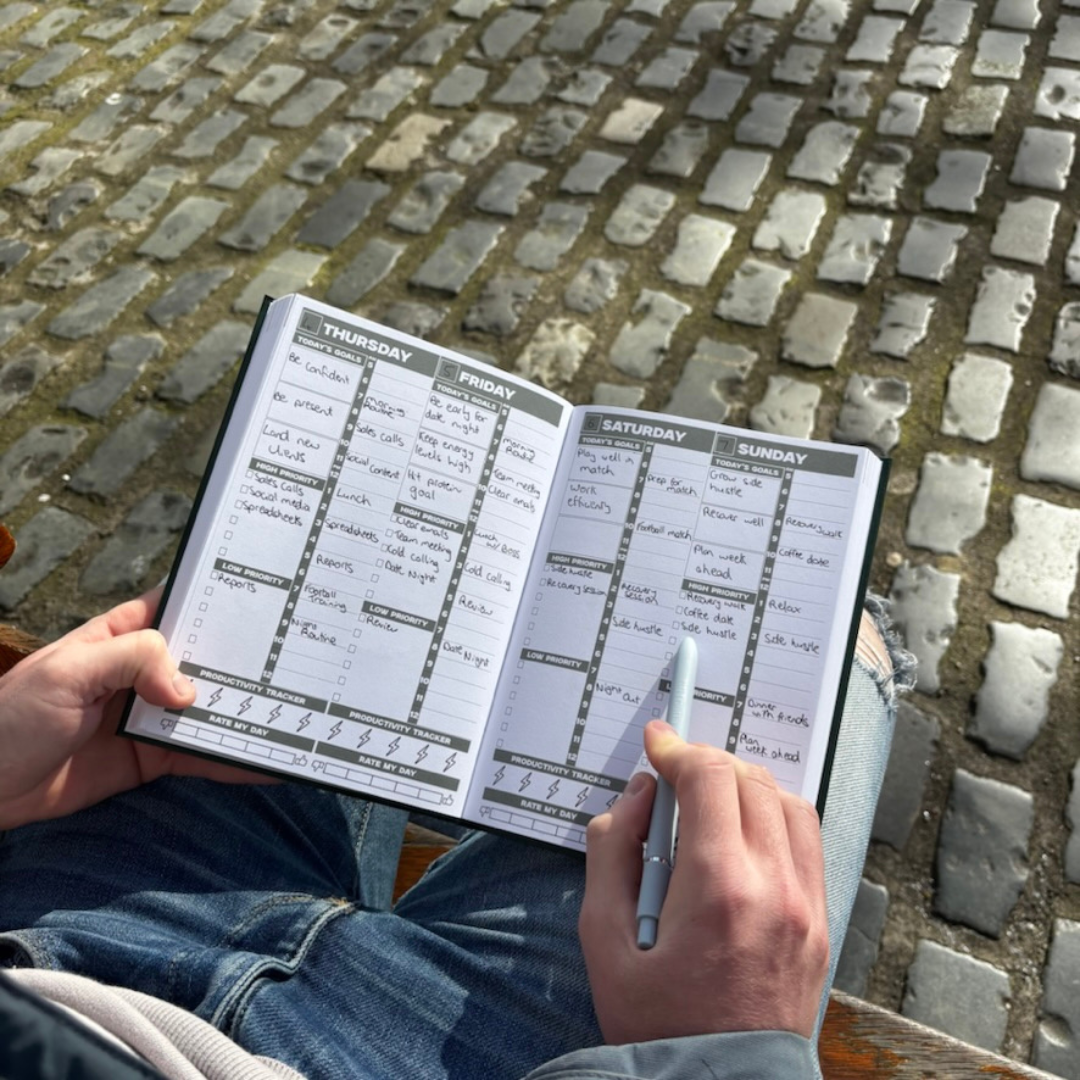
Write the specific two minute starting action directly into your Plan Your Growth undated weekly agenda, not the full task, the specific tiny first move. Open the document. Write the first sentence. Make the first call. A concrete, tiny action is far easier to actually start than an abstract task sitting on your list labeled only with its full, intimidating scope.
Apply the same rule to tasks you have been avoiding for weeks, not just new ones. A long-avoided task often carries extra emotional weight simply from the avoidance itself, a kind of accumulated dread layered on top of the original discomfort. The two minute version works on that compounded resistance just as well as it works on a fresh task, because the mechanism it targets, the fear of starting, does not actually change with time.
Removing the Decision Point Where Avoidance Lives
Procrastination usually has a specific moment where the decision to delay actually gets made, a point where you could either start the task or find a reason not to. Breaking the loop means identifying that specific decision point and removing it entirely, rather than relying on willpower to make the right choice every single time it shows up.
If the decision point is "open my laptop and decide what to work on," remove it by deciding the specific task the night before, during your weekly reset, so the decision is already made before the resistance has a chance to show up fresh each morning. If the decision point is reaching for your phone the moment a task starts to feel uncomfortable, remove the phone from the room entirely before you start, rather than trusting yourself to resist it once discomfort actually arrives.
The goal is not more willpower at the decision point. It is having fewer decision points at all, because every point where avoidance is even possible is a point where, eventually, on a tired enough day, it will win. A system with fewer decision points loses fewer of those individual battles simply because there are fewer of them to lose.
Audit your own week for these decision points directly. Most men can name two or three specific moments where avoidance reliably takes hold, the same time of day, the same trigger, the same internal excuse. Naming them specifically is what makes it possible to design them out of the system rather than continuing to fight the same battle blind, over and over, week after week.
Using Implementation Intentions to Pre-Decide the Response
An implementation intention is a specific, pre-decided plan for how you will respond when resistance shows up, written in an "if this, then that" format. If I feel the urge to check my phone instead of starting this task, then I will do the two minute version first. If I feel like the project is too big to start, then I will write down only the single next physical action required.
This works because it moves the actual decision out of the moment of resistance, when your judgment is most compromised by the discomfort driving the avoidance, and into a calmer moment when you can plan clearly. Decide your implementation intentions during your weekly reset, not in the heat of the moment when the avoidance has already taken hold and is actively arguing its case.
Keep a short, written list of your most common resistance triggers and their pre-decided responses, somewhere you can see it quickly. A procrastination pattern caught and redirected in the first thirty seconds rarely escalates into a lost afternoon. One left to run unchecked for an hour usually does.
Revisit and refine this list monthly rather than writing it once and forgetting it. New triggers surface as your work and responsibilities change, and a list that stays current with your actual life catches far more avoidance moments than one written once, early on, and never updated again.
Building Momentum Through Small Completed Wins
Procrastination tends to compound on itself. One avoided task makes the next one easier to avoid too, because the growing pile itself becomes its own source of discomfort, adding another layer of avoidance on top of whatever drove the original delay. Breaking the loop benefits from deliberately building a short string of small, completed wins to reverse that direction before tackling the larger, more intimidating task.
Start your work session with the smallest task on your list, even if it is not the most important one, specifically to generate the experience of finishing something. That small completion creates real momentum, a felt sense of capability that makes the next task, including the harder one you have been avoiding, feel more approachable than it did before you started.
Track these completions visibly in your agenda rather than letting them pass unnoticed. Seeing a short, consistent string of completed tasks builds a kind of evidence against the avoidance narrative, the quiet belief that you are someone who does not follow through, that no amount of motivational content ever actually addresses directly.
This visible record matters more than it might seem on a given day. Over a month, it becomes a genuine counter-argument to the specific, familiar thought that shows up right before you avoid something: that you always do this, that follow-through is not really your thing. A written record of consistent small wins is harder to argue with than a feeling, even a persistent one.
The Bottom Line
Procrastination is not a discipline problem you can out-motivate your way past. It is an emotional avoidance pattern that needs a system working against it: the two minute rule to break initial resistance, fewer decision points where avoidance can take hold, pre-decided implementation intentions for when resistance shows up anyway, and small completed wins that build real momentum. The feeling of resistance is not going away. The system is what lets you act despite it.
Build your next task into your Plan Your Growth undated weekly agenda as a specific two minute starting action, not the full task. Start there. The rest tends to follow once you have actually begun, and the task that felt impossible to approach an hour ago usually looks considerably more manageable the moment you are actually inside it.