How to Focus Better by Fixing Your Environment First
Ask a man why he can't focus and he will almost always blame himself: not enough discipline, too easily distracted, a short attention span. This framing is wrong, and it is wrong in a way that actively prevents the actual fix. How to focus better is overwhelmingly an environment question, not a willpower question. The modern workspace, phone within reach, notifications firing constantly, a browser with twelve tabs open, is engineered to fragment attention by default. No amount of willpower reliably beats a well-designed distraction, which means the fix has to happen at the environment level, not the mindset level.
The Compounding Cost of a Fragmented Attention Habit
The damage from fragmented attention is not evenly distributed across a day, it compounds. Each task switch does not just cost the immediate refocusing time, it also slightly degrades the quality of the work that follows, because the brain is still partially processing the interruption even after nominally returning to the original task. A day with frequent switching produces not just less output, but measurably lower-quality output across everything touched that day. How to focus better is ultimately a question about protecting quality as much as quantity, because a fragmented eight hours produces work that has to be redone or corrected far more often than a focused three hours does.
Why Willpower Loses to Environment Every Time
Willpower is a finite, depletable resource, drawn down by every decision and every act of resistance across a day. Relying on it to resist a phone sitting visible on the desk, buzzing every few minutes, means fighting the same battle dozens of times daily, and losing that battle occasionally is not a personal failure, it is a statistical certainty given how willpower actually functions. Gloria Mark's research at UC Irvine on attention in digital environments has repeatedly found that the mere visibility of a phone, even switched off, measurably reduces available cognitive capacity for the task at hand. This means how to focus better cannot be solved by simply deciding to focus harder while the environment continues working against that decision.
Setting Boundaries With Colleagues and Teams
Environment design extends beyond your own desk to the expectations of the people around you. If colleagues expect an instant response to every message regardless of the hour, no amount of personal environment control will fully protect focus, because the interruption arrives externally rather than from your own habits. Communicating a clear, simple standard, messages get checked at defined times, urgent matters use a separate, clearly agreed channel, sets an expectation that removes the guilt of not responding instantly and gives colleagues a reliable alternative for anything genuinely time-sensitive. Most men who try this find the pushback is far smaller than anticipated, because most messages were never actually as urgent as the sender's habitual expectation of instant response implied.
Removing the Obvious Interruption Sources
The first and highest-leverage step in learning how to focus better is a physical environment audit. Phone in a different room, not silenced on the desk, not face down, physically removed from the space. Notifications disabled at the operating system level for anything that is not a genuine emergency channel. Browser tabs closed down to only what the current task requires, because an open tab is a standing invitation to switch, regardless of intention to ignore it.
This audit takes under five minutes and produces more improvement in actual focus than months of trying to build willpower against a distracting environment. The goal is not resisting temptation more successfully, it is removing the temptation from the equation entirely.
The Role of Physical State in Sustained Focus
Focus is not purely a matter of environment and scheduling, physical state plays a direct role that is often overlooked. Dehydration, poor sleep, and skipped meals all measurably degrade sustained attention, regardless of how well the external environment has been controlled. A perfectly quiet room and a phone in another room will not produce genuine focus if the underlying physical state is already depleted. How to focus better, in practice, includes basic physical maintenance as part of the environment: water nearby, a meal eaten before a demanding focus block rather than skipped in the name of pushing through, sleep protected the night before anything that requires real cognitive sharpness.
Batching Instead of Constant Checking
A major source of fragmented attention is the habit of checking email and messages continuously throughout the day rather than in defined batches. Each check, even a quick one, triggers a task switch, and the cost of that switch, the 20-plus minutes required to fully refocus afterward, is far larger than the few seconds the check itself appeared to take. How to focus better in practice means batching communication into two or three defined windows daily, rather than leaving it open as a continuous background interruption competing with everything else.
This requires communicating the change to colleagues where relevant, a brief note that messages get checked at specific times rather than instantly, which protects the batching system from being quietly undermined by an expectation of immediate response.
Recognising When Fatigue, Not Distraction, Is the Real Problem
Sometimes what looks like a focus problem is actually an energy problem misdiagnosed. Forcing another protected block through genuine fatigue produces poor results and reinforces a false belief that the environment controls themselves are not working. How to focus better includes the honesty to recognise when the right move is rest rather than another attempt at forced concentration. A short break, even a genuine ten-minute pause away from all screens, often restores enough capacity to make the next attempt at a focus block dramatically more productive than pushing straight through the fatigue would have been.
Structuring the Day Around Protected Blocks
Environment design extends to the calendar itself. A day with no defined focus blocks defaults to fragmented attention, because unscheduled time gets filled reactively with whatever demands attention loudest. Blocking specific, protected windows, ideally during your highest-energy hours, and treating them with the same non-negotiable status as a client meeting, is the calendar-level version of the same environment-first principle.
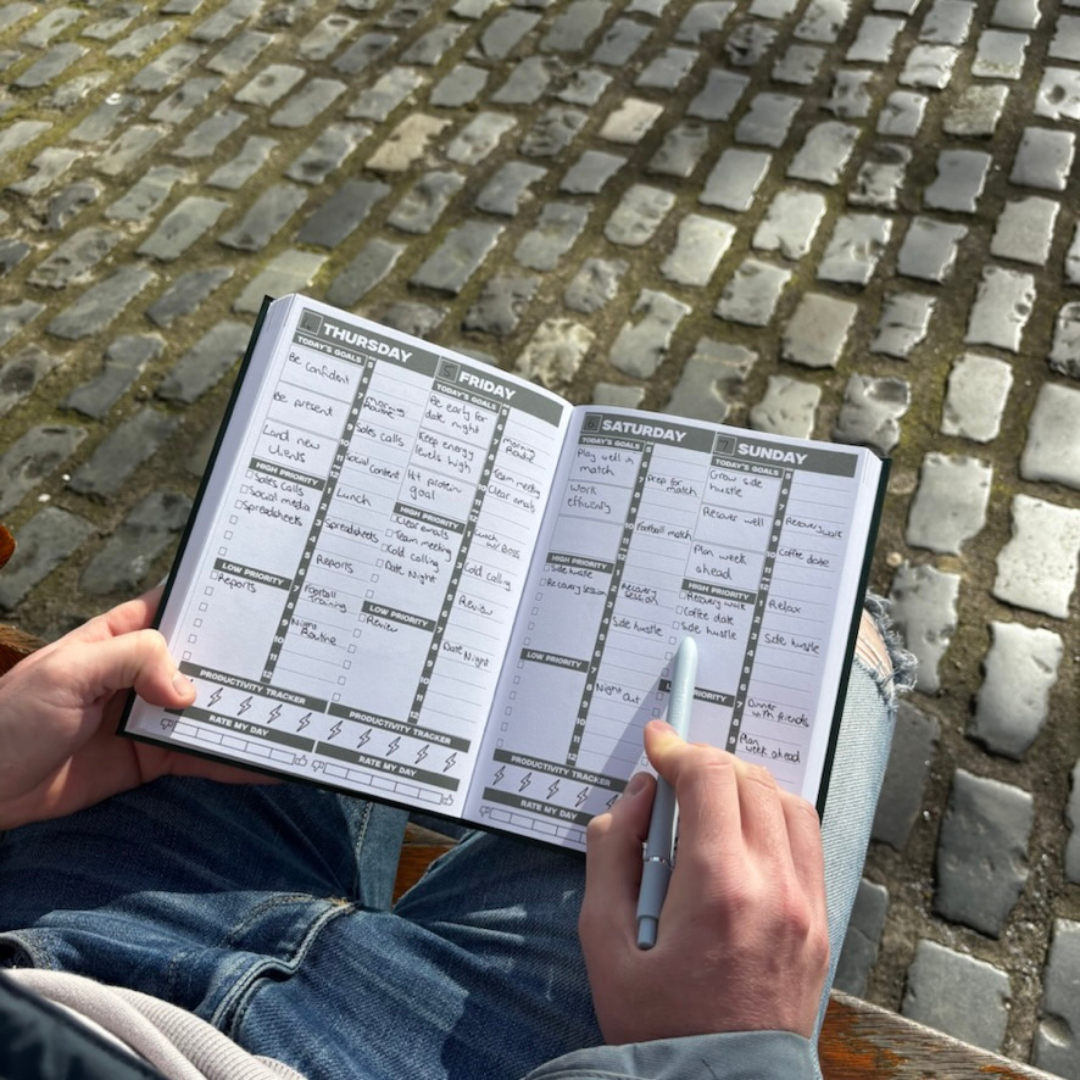
This is exactly the structure the Plan Your Growth undated weekly agenda is built to hold: dedicated daily blocks for protected focus time, distinct from meetings and admin, so the environment change extends from the physical desk into the actual schedule of the day.
Training Attention Once the Environment Is Fixed
With the environment controls in place, attention itself can be trained the way any capacity improves, through graduated, consistent practice. Start with shorter focus blocks, 25 to 45 minutes, and extend only once that duration is reliably sustained without the pull toward distraction. Attempting a four-hour block immediately, even in a well-controlled environment, sets up an unrealistic standard that produces frustration and abandonment rather than the gradual capacity-building that actually works.
Note the pull toward distraction when it appears rather than fighting it internally. A quick written note, "check this later," captures the stray thought without abandoning the current task, and prevents the mental effort of trying to hold onto it while also trying to stay focused.
Measuring Whether It's Actually Working
How to focus better is easiest to verify through a simple weekly check: how many protected focus blocks were actually completed without interruption, versus how many got broken. This single metric, tracked in the same weekly review that holds every other goal accountable, turns an abstract sense of "focusing better" into a measurable trend, the same way any other tracked goal improves through visibility over time.
The Bottom Line
How to focus better starts with the environment, not the mindset: remove the phone, batch communication into defined windows, block protected focus time on the calendar with real weight, and train attention gradually once the environment stops working against you. Willpower was never the actual bottleneck. A distraction-engineered environment was. Fix that first, and the focus most men assume they lack tends to show up on its own.
Block your protected focus windows into the Plan Your Growth undated weekly agenda, and give the environment change a real, trackable place to live every single week.