Task Decomposition: How to Stop Procrastinating on Big Projects
You don't have a time problem. You have an emotional regulation problem. That's not opinion. It's what thirty years of research into why humans procrastinate actually says, and a huge share of that emotional friction comes from a single, fixable cause: the task in front of you is too large and undefined to start comfortably. "Launch the business." "Write the report." "Fix the process." These are not tasks. They are outcomes with no visible first step, and a mind facing an outcome with no clear entry point defaults to avoidance almost every time. Task decomposition is the fix, breaking any large project into steps small enough that starting stops requiring willpower at all.
Why Big Tasks Trigger Avoidance
Procrastination researcher Tim Pychyl's work consistently finds that procrastination is fundamentally about managing negative emotion in the moment, not about poor time management or laziness. A large, vague task triggers discomfort, uncertainty about where to start, fear of doing it wrong, the sheer size of the mental effort required to hold the whole project in your head at once, and the brain's immediate response to that discomfort is to seek relief, usually by doing literally anything else instead.
This explains a pattern almost every man recognizes: reorganizing your desk, answering low-priority emails, scrolling your phone, all suddenly become appealing the moment a genuinely important but poorly defined task needs to start. This is not weak character. It is a predictable response to a task that has not been broken down enough to feel approachable, and the fix is not more discipline. It is better task design.
What Task Decomposition Actually Means
Task decomposition is the practice of breaking a large project into a sequence of small, specific, immediately actionable steps, each one clear enough that you could start it within the next two minutes without needing to think further about what it actually requires. "Write the report" becomes "open a blank document and write three bullet points of what the report needs to cover." The outcome has not changed. The entry point has changed completely.
The test for whether a step is decomposed enough is simple: could you start it right now, in the next two minutes, without any additional clarification or decision-making? If the answer is no, the step is still too large and needs to be broken down further. This might feel excessive for some tasks, but the goal is removing every ounce of ambiguity that could give your brain an excuse to default to avoidance.
Breaking Down Your Next Big Project
Step one: write the full outcome at the top of the page. Name what "done" actually looks like for this project, specifically. Vague outcomes produce vague decomposition, so be precise about the actual deliverable.
Step two: list every major phase between now and done. Not the granular steps yet, just the broad phases. A report might break into research, outline, first draft, revision, final formatting. This gives you the skeleton before you fill in the small bones.
Step three: break each phase into two-minute-start steps. Take the first phase and decompose it into steps small enough to start immediately. "Research" might become "find three sources," "read source one and note the key points," "read source two and note the key points." Each step should feel almost too small to matter, which is exactly the point.
Step four: sequence the steps, not the phases. Once you have the small steps for the first phase, you have your actual to-do list for this project, at least for now. You do not need to decompose every future phase today. Decompose the current one, execute it, then decompose the next phase once you arrive there with more clarity than you had at the start.
Step five: schedule the very first step, today. A decomposed project with no scheduled start time is still just a well-organized intention. Put the first small step on your calendar, in a specific slot, so the decomposition actually converts into action rather than remaining a nicely formatted list you admire and then avoid anyway.
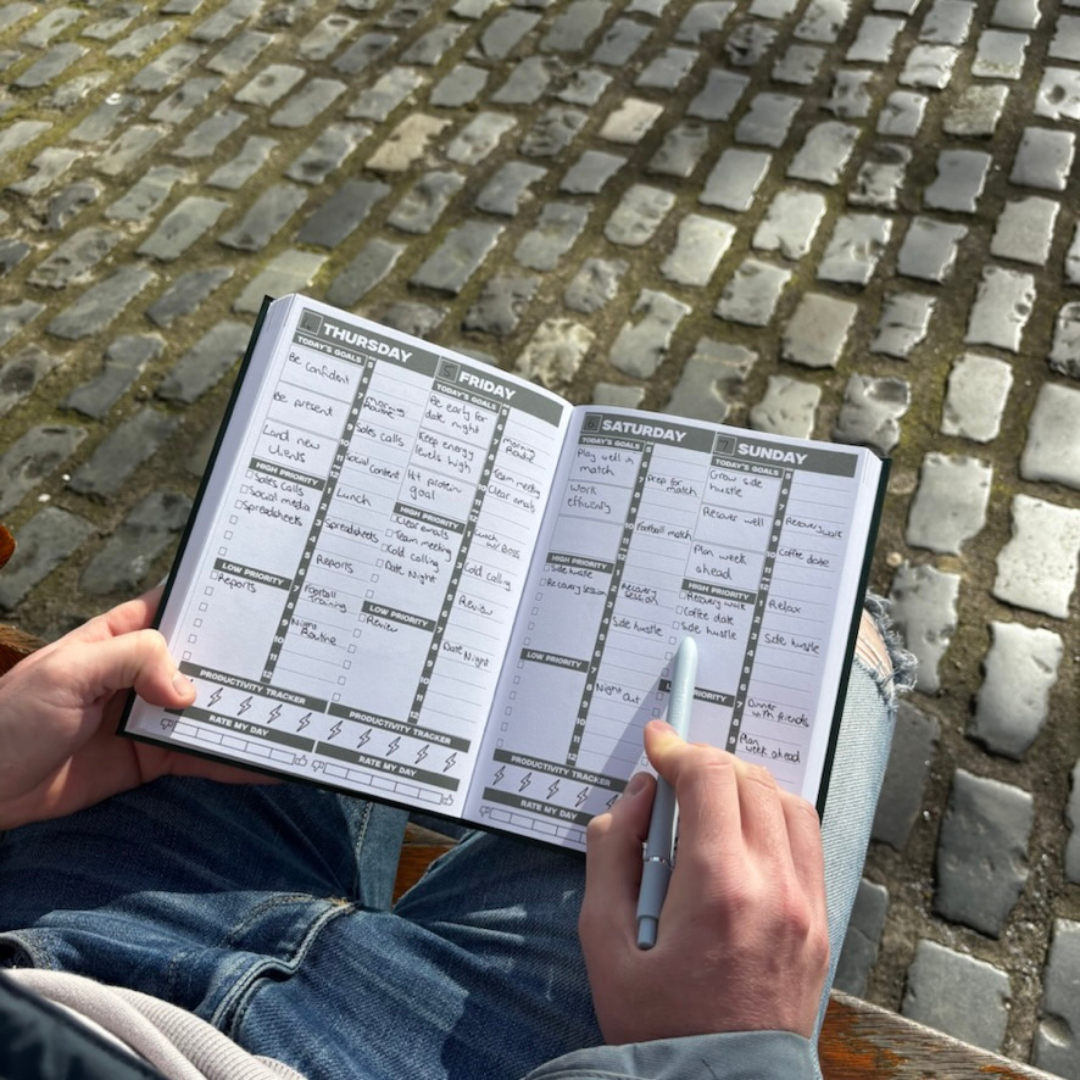
The Plan Your Growth undated weekly agenda gives decomposed project steps a real place in your daily and weekly structure, so the small first step you identified does not get lost in a separate project document you forget to open.
Why Starting Small Builds Momentum for the Whole Project
There is a psychological mechanism at work beyond simply making the first step easier: completing a small step, even a genuinely tiny one, produces a real sense of forward motion that tends to reduce the resistance to the next step. This mirrors a pattern researchers sometimes describe in relation to the Zeigarnik effect, where a task, once started, creates its own pull toward completion that did not exist while it remained entirely untouched.
This is why the two-minute rule, doing a task if it takes less than two minutes, or in this case, starting a decomposed step small enough to begin within two minutes, works so reliably as an anti-procrastination tool. It is not really about the two minutes themselves. It is about breaking the psychological barrier of an unstarted task, after which continuing tends to require far less willpower than starting did in the first place.
When Decomposition Alone Is Not Enough
Some procrastination is not really about task size at all, but about a deeper avoidance rooted in fear of failure, perfectionism, or genuine uncertainty about whether the project is even the right one to pursue. Task decomposition helps enormously with the size and ambiguity problem, but it is worth being honest with yourself about which kind of resistance you are actually facing.
If decomposing a task into small, clear steps still produces significant avoidance, the resistance may be pointing at something worth examining directly, whether the project genuinely matters to you, whether you are afraid of a specific outcome, or whether perfectionism is inflating the stakes of an early, imperfect step beyond what is reasonable. Decomposition solves the structural problem. It is not designed to solve every underlying emotional one, and recognizing the difference saves you from repeatedly re-decomposing a task that was never really about size to begin with.
Building the Habit of Decomposing Automatically
Over time, task decomposition stops needing to be a deliberate, written-out exercise for every project and starts becoming an automatic mental habit, applied the moment a large task appears on your radar. This shift usually happens after enough repetitions that the pattern, break it down before attempting to start, becomes the default response to overwhelm rather than a technique you have to consciously remember to apply.
Until that shift happens, treat the written-out version as the standard practice for any project that feels genuinely large or has been sitting untouched for more than a few days. The discomfort of an undecomposed task rarely resolves itself through good intentions alone. It resolves through the concrete, mechanical act of making the next step small enough that starting no longer requires convincing yourself first.
The Bottom Line
Procrastination on a big project is rarely about laziness. It is about facing an outcome with no clear, small entry point, which triggers avoidance as a predictable emotional response. Task decomposition fixes this directly: break the project into phases, break each phase into steps small enough to start within two minutes, and schedule the very first one today. Momentum from a small completed step reduces resistance to the next one far more reliably than willpower alone ever will.
The Plan Your Growth undated weekly agenda gives your decomposed steps a real, scheduled home in your week, so the small first move you identified actually happens instead of staying a good idea on a separate list you never open.