The Eisenhower Matrix: How to Prioritize Like a CEO
Not urgent and not important are the two words that describe most of what fills your day, and almost nobody sorts their tasks by that distinction. President Dwight Eisenhower reportedly said, "What is important is seldom urgent, and what is urgent is seldom important." That single sentence is the foundation of one of the most durable prioritization frameworks ever built, and most men have heard of it without ever actually running it. The Eisenhower matrix forces a decision most men avoid: sorting tasks not by how loud they are, but by what they actually move.
Urgent vs. Important: The Distinction That Changes Everything
Urgent means a task demands attention now, usually because of an external deadline or someone else's pressure. Important means a task moves you toward a goal that actually matters to you, regardless of when it is due. The confusion between these two categories is the single biggest source of wasted days for ambitious men, because urgent tasks feel productive to complete even when they contribute nothing to what you are actually trying to build.
A ringing phone is urgent. It is rarely important. An email marked "ASAP" by someone else's priorities is urgent. It is often not important to your goals at all. Meanwhile, the strategic project that would change your career trajectory has no deadline screaming at you today, so it gets pushed to tomorrow, and tomorrow, and tomorrow, until months have passed and it still has not moved.
The Eisenhower matrix solves this by forcing every task through a two-axis sort: urgent or not urgent, important or not important. Four quadrants emerge, and each one tells you exactly what to do with the task inside it.
The Four Quadrants, Explained
Quadrant one: urgent and important. These are crises and hard deadlines. A client emergency. A health issue. A project due tomorrow that actually matters to your goals. Do these immediately. There is no debate here, but the goal of running this matrix consistently is to shrink this quadrant over time through better planning, because a life spent constantly in quadrant one is a life running on adrenaline instead of strategy.
Quadrant two: not urgent but important. This is where the CEO mindset lives, and it is the quadrant almost every man neglects. Strategic planning, skill building, relationship investment, exercise, deep work on long-term goals. Nothing here is screaming for attention today, which is exactly why it gets pushed aside in favor of quadrant three. Schedule these tasks deliberately, because they will never demand a slot on their own. This is the quadrant where compounding growth actually happens.
Quadrant three: urgent but not important. Most interruptions live here. Certain emails, certain meetings, other people's requests that feel pressing but do not actually serve your goals. The instinct is to do these because they feel urgent, but the discipline move is to delegate them wherever possible, or batch them into a fixed window instead of letting them derail your quadrant two work throughout the day.
Quadrant four: not urgent and not important. Mindless scrolling, busywork, low-value distractions. Eliminate these entirely. This quadrant produces nothing and exists mainly to soothe the discomfort of doing hard things.
Why Quadrant Two Is the Real Prize
Here is the part that separates men who use this framework as a mental exercise from men who use it to actually change their output: quadrant two is where you should be spending the majority of your discretionary time, and almost no one does it by default.
Research on executive time allocation consistently shows that high performers deliberately protect blocks of time for exactly this category, strategic, non-urgent, high-importance work, rather than letting their calendar fill reactively with quadrant one and quadrant three demands. Cal Newport's research on deep work makes a related point: the ability to focus without distraction on cognitively demanding tasks is becoming both increasingly rare and increasingly valuable, precisely because most professionals spend their days pulled into quadrant three by the constant noise of modern communication tools.
The problem with quadrant two is structural, not motivational. Nothing forces you into it. There is no deadline pulling you toward the strategic project, the skill you should be building, or the relationship you should be investing in. Left unscheduled, quadrant two tasks lose every single time to the urgency of quadrant one and three, not because they matter less, but because urgency is a louder signal than importance, and your brain responds to loud signals by default.
Running the Matrix in Practice
Here is how to actually use this framework instead of just nodding at the theory.
Step one: dump every task on your plate. Every open loop, every commitment, every project sitting in your head or across five different apps. Get it all visible in one place.
Step two: sort each task into one of the four quadrants. Be honest here. The tendency is to inflate everything into quadrant one because it feels productive to be busy. Ask a sharper question for each task: if I ignored this for a week, would anything meaningful actually break? If not, it is not quadrant one.
Step three: schedule quadrant two first. Before anything else goes on your calendar, block time for your highest-importance, non-urgent work. This is the step almost everyone skips, and it is the single highest-leverage move in the entire system. If quadrant two does not get a scheduled slot, it will not happen, because nothing is forcing it to.
Step four: batch or delegate quadrant three. Set fixed windows for email and low-stakes requests instead of responding to them continuously throughout the day. If you can hand a task to someone else without meaningfully sacrificing quality, do it.
Step five: eliminate quadrant four without guilt. You do not need a plan to reduce mindless scrolling. You need to notice it and cut it, which becomes far easier once quadrant two is properly scheduled and giving you a sense of forward motion that quadrant four never provides.
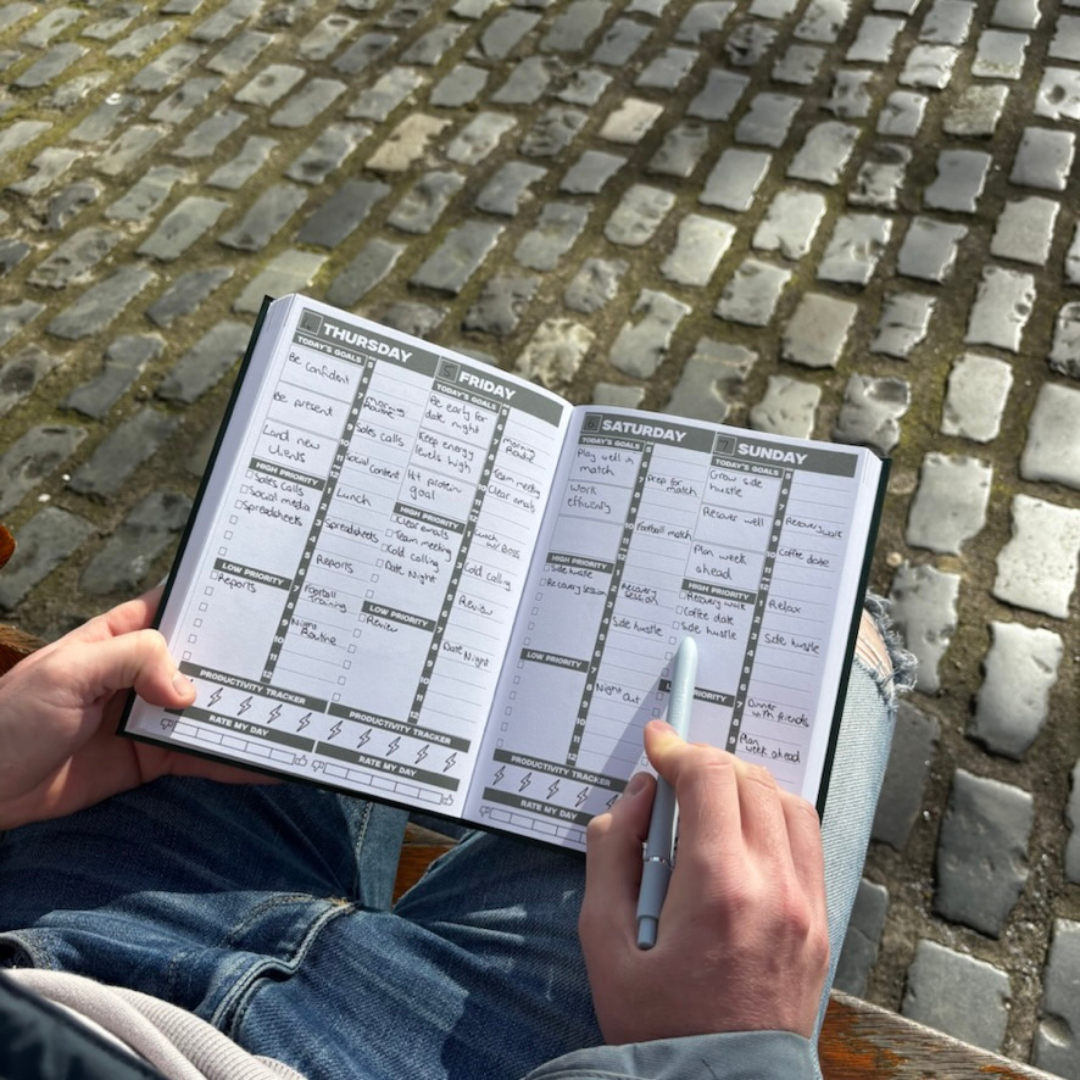
The Plan Your Growth undated weekly agenda includes a built-in Eisenhower matrix on the daily spread specifically so this sort takes minutes, not a separate exercise you have to remember to run. The framework only works if it is easy enough to use every single day, and a system that requires you to draw a fresh grid from memory rarely survives past week one.
Why Most Men Abandon This Framework (and How to Not Be One of Them)
The Eisenhower matrix is not a hard framework to understand. It is a hard framework to sustain, because it requires an honest daily audit of what actually matters versus what merely feels urgent, and that honesty is uncomfortable when it reveals how much of your day has been spent on quadrant three and four.
The fix is not motivation. It is structure. Run the sort at the same time every day, ideally as part of your morning or evening planning, so it becomes automatic rather than something you have to remember to do. Pair it with a fixed weekly review where you check whether quadrant two actually got its scheduled time, or whether quadrant one and three quietly ate it again. That weekly checkpoint is what turns this from a one-time insight into a permanent operating system.
The Bottom Line
Urgent and important are not the same thing, and every day you treat them as interchangeable is a day spent reacting instead of building. The Eisenhower matrix forces the sort: urgent and important gets done now, important but not urgent gets scheduled deliberately, urgent but not important gets delegated or batched, and everything else gets cut. Quadrant two is where your real growth lives. Protect it like it matters, because it does.
The Plan Your Growth undated weekly agenda builds the Eisenhower sort directly into your daily planning, so prioritizing like a CEO takes five minutes instead of becoming one more thing that never happens. Sort it once a day. Watch quadrant two finally get the time it has always deserved.