The Eisenhower Matrix: How to Prioritize Like a CEO
"What is important is seldom urgent, and what is urgent is seldom important." That line, attributed to President Dwight Eisenhower, is the entire foundation of the matrix that carries his name, and it names a trap most ambitious men fall into constantly: mistaking a busy day for a productive one. The Eisenhower matrix forces a distinction most task lists never make, between what feels pressing right now and what actually moves your goals forward, and that single distinction is worth more than almost any other prioritization technique you will find.
The Two Questions Behind the Whole System
Every task you face can be sorted along two separate axes: is it urgent, meaning it has a deadline or immediate consequence, and is it important, meaning it genuinely moves you toward a goal that matters. These are independent questions. A task can be urgent without being important, like a low-value request that happens to have a tight deadline attached. A task can be important without being urgent, like the strategic work that has no deadline pressing on it today but will determine your outcomes months from now.
Most men's days are run entirely by the urgent axis, because urgency creates a psychological pull that importance does not. A ringing phone, a Slack message marked urgent, an email demanding a reply today, all generate a felt sense of pressure that a quiet, important task, like strategic planning or deep work on a long-term goal, simply does not produce on its own. Left unmanaged, urgency wins by default, every single time, regardless of whether it deserves to.
The Four Quadrants
Quadrant one: urgent and important. This is crisis work, genuine emergencies, deadlines with real consequences. This quadrant needs to exist, but a life dominated by it is a life in constant reactive mode, and if most of your week lives here, that is usually a sign of poor planning further upstream, not just bad luck. The goal is not to eliminate this quadrant entirely. It's to shrink it by handling more of your work before it becomes a crisis.
Quadrant two: important, not urgent. This is the quadrant that actually builds your future: strategic planning, skill development, relationship building, deep work on long-term goals, physical training, anything that compounds over months rather than resolving in a day. Because nothing in this quadrant is screaming for attention today, it is the quadrant men most consistently neglect, and it is also the one that separates men who are actually progressing from men who are simply staying busy.
Quadrant three: urgent, not important. Most interruptions live here: a colleague's request that could wait but is framed as urgent, a meeting that exists mostly out of habit, a low-value task with an artificial deadline attached. This quadrant feels productive because it produces the same felt urgency as quadrant one, but the actual value of completing it is far lower. The skill here is learning to recognize the false urgency for what it is.
Quadrant four: not urgent, not important. Genuine time-wasters. Mindless scrolling, low-value entertainment consumed reflexively rather than deliberately, busywork that exists mainly to feel productive without producing anything. This quadrant is not evil, rest and recreation matter, but it needs to be a deliberate choice, not the default destination for time that wasn't protected for something better.
Applying the Matrix to a Real Week
Sunday, during your weekly planning, list everything currently on your plate: tasks, projects, requests, obligations. For each one, ask the two questions honestly: does this have a genuine deadline or consequence, and does this actually move something that matters forward, not just feel like it does.
Sort the list into the four quadrants. Quadrant two gets scheduled first, into your highest-energy hours, before anything else claims that time, because if you wait to fit quadrant two in after everything urgent is handled, it never gets handled at all. This is the single most important application of the matrix: protecting time for important, non-urgent work before the urgent, less important work has a chance to consume the whole week.
Quadrant one gets handled as it arises, but track how large this quadrant is becoming over time. A quadrant one that keeps growing month over month is usually a sign that quadrant two work, the planning and preventive work that stops emergencies from happening in the first place, is being systematically under-invested.
Quadrant three is where delegation and boundaries do the most work. Not every urgent-but-unimportant request needs to be yours to handle. Learning to say no, or to redirect, to this quadrant specifically is one of the highest-leverage skills in the entire system, because every hour reclaimed from quadrant three is an hour available for quadrant two instead.
Quadrant four gets bounded, not eliminated. Decide in advance how much time belongs here and protect the rest of the week from it, rather than letting it expand to fill whatever time isn't otherwise claimed, which is its natural tendency if left unchecked.
Why This Is Harder Than It Sounds
The matrix is conceptually simple and practically difficult, because the pull of urgency is a psychological force, not just an intellectual category error. Recognizing in the moment that a ringing phone or a demanding message belongs in quadrant three, not quadrant one, requires a level of deliberate pause that most days do not naturally provide. This is why the matrix works best as a weekly planning tool first, sorting your known tasks in advance, rather than trying to apply it in real time to every interruption as it happens. The advance sorting builds the judgment you will later apply faster, in the moment, once the categories become familiar.
This connects directly to Cal Newport's broader argument about focused work: the ability to protect quadrant two time from the constant pull of quadrant one and three is precisely the skill that separates high output from busy output. The matrix gives you the language and the categories. The weekly discipline of actually sorting your tasks into it, and then protecting quadrant two time on your calendar, is what makes the framework produce real results instead of staying a nice idea you read once.
Building It Into Your Weekly Plan
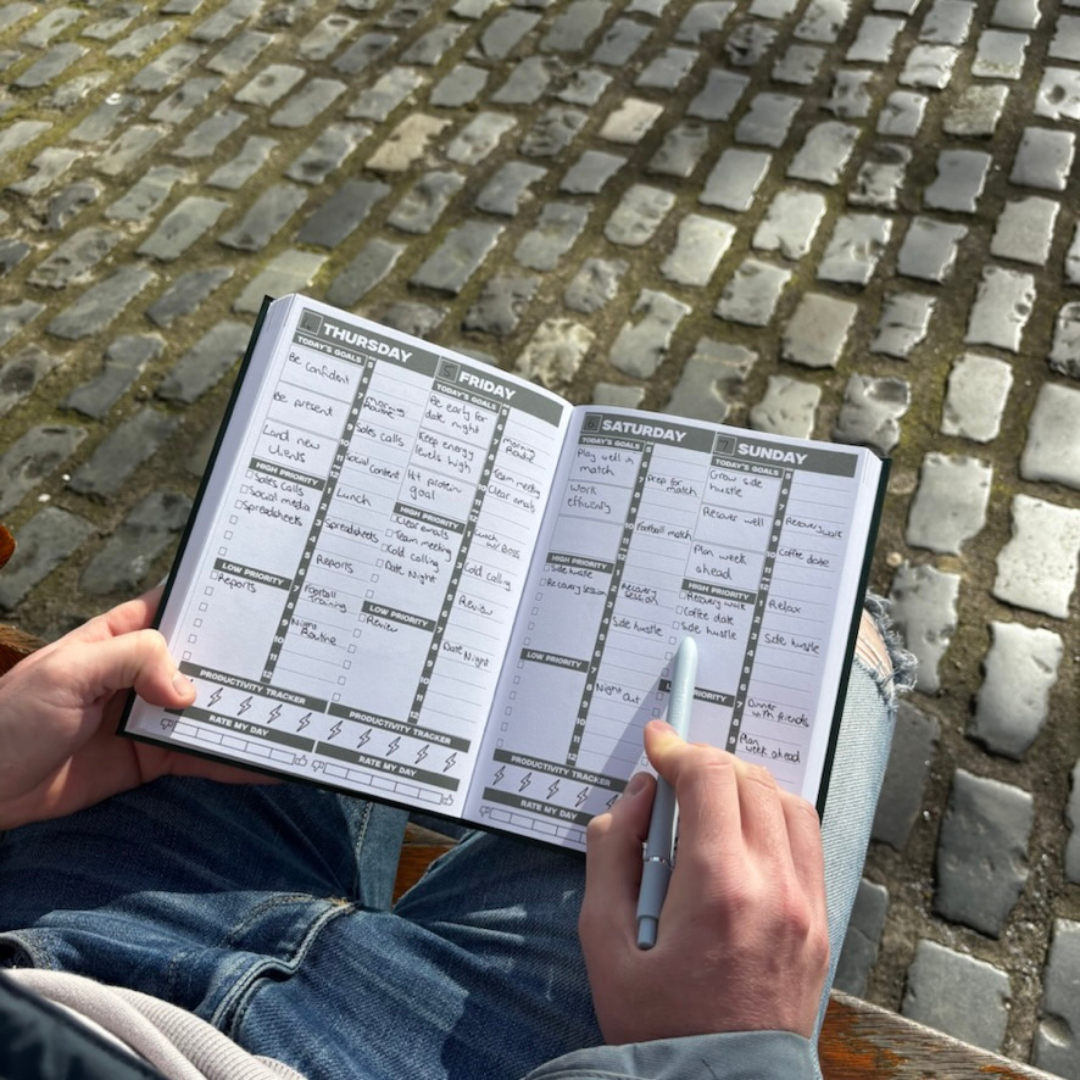
Every Sunday, list your week's tasks and sort them into the four quadrants before you block a single hour. Place quadrant two items into your highest-energy time first. Batch quadrant three items into a single block rather than letting them interrupt the rest of the week individually. This is exactly the kind of structured weekly sorting the Plan Your Growth undated weekly agenda is designed to support: a page to lay out the week's priorities before you commit any hours to them, so quadrant two work gets protected by design rather than by hoping it survives an unplanned week.
A Worked Example
Consider a typical Monday list: a client emergency that surfaced overnight, a strategic planning session you've been putting off for a month, a colleague's request for feedback on a document due by end of day, forty-five minutes of accumulated email, and a training session you've been meaning to schedule. Run each through the two questions honestly.
The client emergency is quadrant one, genuinely urgent and important, and it gets handled first, without debate. The strategic planning session is quadrant two, no deadline pressing today, but it's the work that actually determines whether next quarter looks different from this one, so it gets the next best block of the day, not whatever is left over. The colleague's feedback request, despite the same-day deadline, is worth a second look: is it genuinely important, or does it simply feel urgent because it has a deadline attached. If it's low-stakes, it's quadrant three, and it gets batched or delegated rather than interrupting the planning session. The email gets its own batch block later in the day. The training session, deliberately scheduled rather than squeezed in, is quadrant two as well, health and capacity building for the long term, and it gets protected the same way the strategic session does.
Run this exercise honestly across a full week's task list and the pattern becomes obvious quickly: most days are dominated by quadrant three tasks wearing quadrant one's urgency as a disguise. Learning to spot that disguise is most of the value the matrix provides.
Revisiting the Matrix as Your Role Changes
The quadrant a given task falls into is not fixed forever. A task that was genuinely quadrant three early in your career, a request you had no standing to delegate or decline, may shift toward something you can now hand off entirely as your role and authority grow. Revisit your sorting periodically, not just weekly at the task level but quarterly at the pattern level: is the same category of task still landing in quadrant three for you, and if so, is that because it genuinely still requires you, or because delegating it simply hasn't been set up yet. The matrix stays useful over years only if the categories are re-examined as your actual capacity and authority change, rather than being sorted once and left on autopilot indefinitely.
Teaching the Matrix to a Team
If you manage others, the matrix becomes more powerful once the people around you understand it too, because a shared vocabulary for urgency versus importance changes how requests get framed in the first place. A team that has internalized the distinction tends to flag genuine quadrant one items clearly and stops dressing up quadrant three requests in artificial urgency to get faster attention. This doesn't happen from a single presentation. It happens from consistently, visibly applying the framework yourself, protecting your own quadrant two time in front of your team, and gently pushing back when a request is framed as more urgent than it actually is. Over months, the standard you model becomes the standard your team defaults to as well.
The Bottom Line
The Eisenhower matrix works because it separates two things your brain naturally conflates: how loud a task is, and how much it actually matters. Sort your tasks into the four quadrants every week, protect time for important, non-urgent work before urgent work claims your whole schedule, and learn to recognize false urgency in quadrant three before it eats hours that belong somewhere more valuable. The men who build genuine long-term progress are the ones protecting quadrant two, every single week, not the ones simply reacting fastest to whatever feels loudest that day.
The Plan Your Growth undated weekly agenda gives you the weekly space to sort your priorities before the week starts, so your most important work gets a protected slot instead of competing for leftover time. No printed dates, so you can start applying this system the week you pick it up, not the next arbitrary one on the calendar.