Why Single-Tasking Beats Multitasking Every Single Time
Multitasking feels productive in the moment and measures badly on almost every real metric that matters. The sensation of juggling several things at once creates a feeling of high output, while the actual research on task switching consistently shows the opposite: total completion time increases, error rates rise, and the quality of each individual task drops compared to giving it undivided attention. Single-tasking is the deliberate, unglamorous alternative, one task at a time, genuinely finished before the next one starts, and it consistently outperforms the multitasking approach it feels less impressive than.
The One Exception Worth Naming
Not every simultaneous activity qualifies as harmful multitasking. Pairing a genuinely low-cognitive-load activity, folding laundry, a repetitive physical task, with something requiring real thought does not carry the same switching cost as toggling between two demanding cognitive tasks, because only one of the two is actually competing for the brain's limited attention resources at any given moment. The distinction worth drawing is between combining a demanding task with a genuinely automatic one, which is fine, and combining two tasks that both require real thought, which is where the switching cost actually bites. Most of the damaging multitasking men do during a workday falls firmly into the second category, not the first.
What Multitasking Actually Is, Neurologically
The brain does not truly process two demanding tasks simultaneously, despite how multitasking feels from the inside. What actually happens is rapid task switching, the brain toggling back and forth between tasks, and each switch carries a measurable cost, a brief period where attention has not fully transferred and performance on both tasks suffers. Gloria Mark, a researcher at UC Irvine who has spent years studying attention and task switching in real work environments, has found that recovering full focus after a task switch typically takes over twenty minutes, far longer than most people assume, and that frequent switching throughout a day compounds into a significant, measurable loss of total productive time.
This means the sensation of "doing two things at once" is, in most cases, an illusion. What is actually happening is two things being done worse and slower than either would have been done alone, with the switching cost itself consuming time that never shows up as a line item anyone notices.
Why Meetings Are a Common Multitasking Trap
A specific and widespread example worth naming directly is attempting to work on unrelated tasks during a meeting, answering email, reviewing a document, while nominally participating in the discussion. This produces a worse outcome on both fronts simultaneously, reduced comprehension and engagement in the meeting itself, and lower-quality output on the side task being attempted, compared to giving either one undivided attention separately. A single-tasking approach to meetings, full attention during the meeting itself and the side task handled afterward in its own dedicated block, is almost always faster overall than attempting both poorly at the same time, even though it can feel like the meeting alone is a less efficient use of the hour in isolation.
Why Single-Tasking Feels Slower at First
The counterintuitive part of single-tasking is that it often feels slower to start, sitting with one task and deliberately ignoring the pull to check something else feels less immediately satisfying than the sensation of managing several things simultaneously. This feeling is misleading. The perceived speed of multitasking comes from the illusion of progress on multiple fronts at once, not from actual faster completion, and the moment total completion time is measured honestly, single-tasking wins decisively, precisely because it eliminates the repeated switching cost multitasking incurs throughout the process.
Training the Discomfort of Doing Only One Thing
For men accustomed to years of habitual multitasking, sitting with only one task in view can produce a genuine, almost restless discomfort in the first several attempts, a nagging sense that something else should also be happening simultaneously. This discomfort is worth expecting rather than treating as a sign single-tasking is not working. It fades with repeated practice, the same way any unfamiliar constraint feels uncomfortable initially and gradually normalises. Starting with shorter single-tasking blocks, twenty minutes rather than two hours, and extending the duration only once the shorter version feels genuinely comfortable, builds the tolerance gradually rather than demanding an uncomfortable, unsustainable leap all at once.
Building a Genuine Single-Tasking Practice
Single-tasking as a deliberate practice starts with the same environment discipline that protects any focused work: one task visible at a time, everything else physically or digitally out of view. This might mean closing every browser tab except the one relevant to the current task, putting the phone in another room, or using a single sheet of paper listing only the current task rather than a full list that invites the eye to wander toward what comes next.
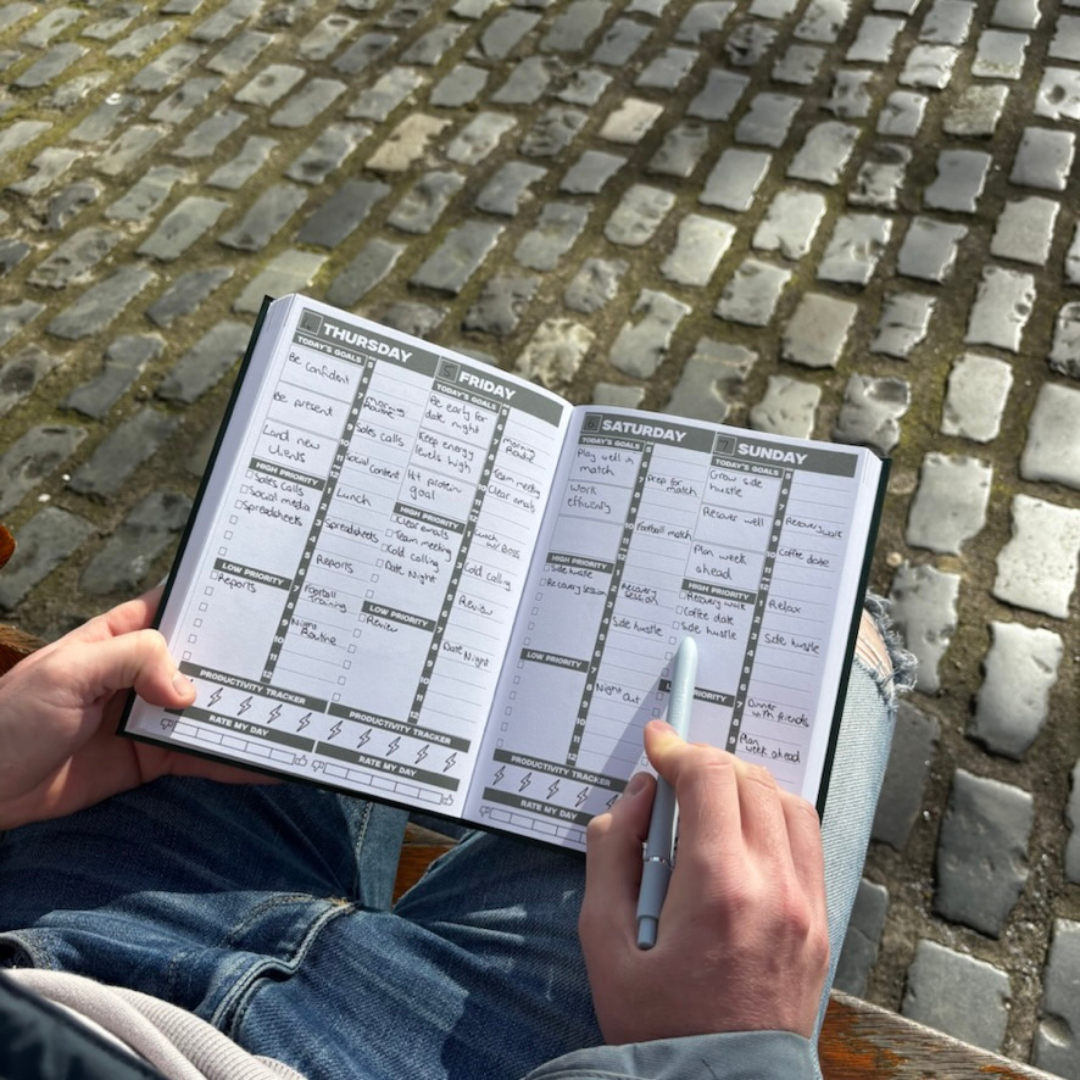
Block single-tasking sessions directly into the Plan Your Growth undated weekly agenda, naming the one specific task each block is dedicated to, rather than a vague window labelled simply "work," which tends to default back into juggling several loosely related things at once the moment it begins.
Handling the Pull to Switch Mid-Task
Even with a well-controlled environment, the urge to switch to something else mid-task will surface regularly, a stray thought about another project, the temptation to quickly check a message. The response is not to fight this urge through willpower alone but to capture it without acting on it, a quick note jotted down, "check this after," which lets the thought exist on paper without requiring the actual task switch to address it right now. This single habit, capture without switching, preserves the momentum of the current task while still ensuring the stray thought is not lost entirely.
Measuring the Difference Honestly
The clearest way to internalise the value of single-tasking is a direct, honest comparison: time how long a specific type of task takes when done with deliberate single focus versus the same type of task done while switching between two or three others. Most men who run this comparison even once are genuinely surprised by the gap, because the switching cost is invisible while it is happening, it only becomes obvious when measured directly against the alternative. This kind of direct, personal evidence tends to be far more convincing than any general research finding, because it is specific to your own actual work.
The Bottom Line
Single-tasking outperforms multitasking on every metric that actually matters, total completion time, error rate, and the final quality of the work produced, even though it feels less immediately satisfying in the moment. Build the practice through environment control, one task visible at a time, capture stray thoughts without acting on them mid-task, and measure the difference directly rather than relying on the feeling of productivity multitasking falsely provides. The men who consistently produce the most valuable work are rarely juggling the most things at once, they have simply learned to do one thing at a time and finish it properly.
Block your single-tasking sessions directly into the Plan Your Growth undated weekly agenda, one task per block, and measure the difference for yourself.